Analyse the nature of agrarian taxation under the Mauryas
The nature of agrarian taxation under the Maurya Empire was systematic, organized, and state-controlled, reflecting the highly centralized administrative structure of the empire. It formed the backbone of the Mauryan economy, as agriculture was the principal source of livelihood and revenue. The taxation system during this period was both comprehensive and pragmatic, designed to ensure a stable income for the state while maintaining agricultural productivity.
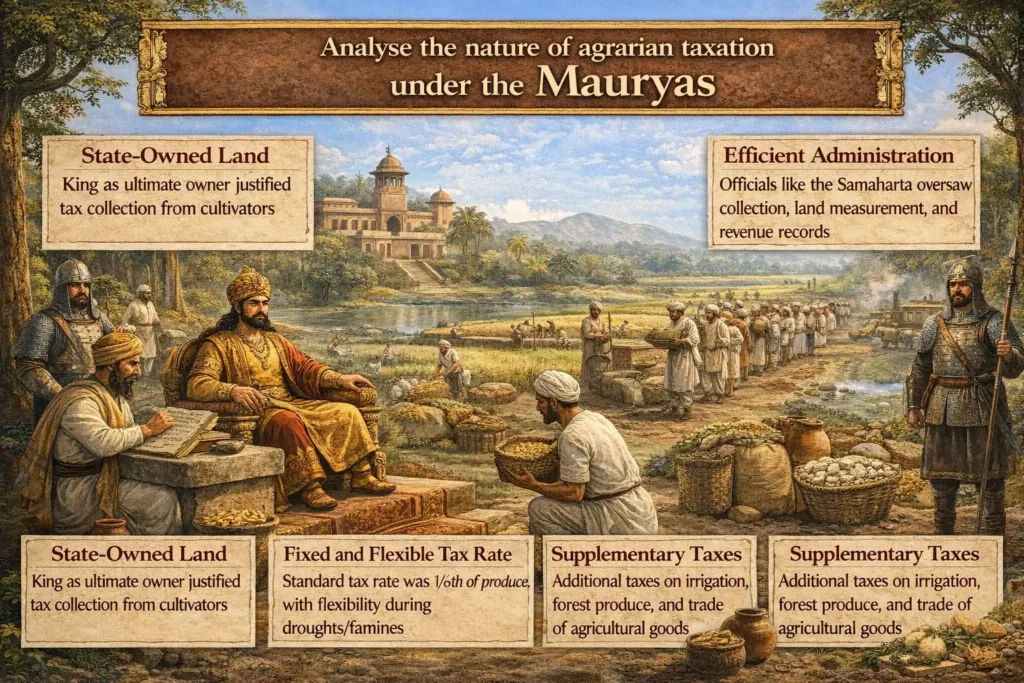
One of the most important sources for understanding Mauryan taxation is the Arthashastra, attributed to Kautilya. It provides detailed insights into revenue administration and fiscal policies. According to this text, the state claimed a share of agricultural produce, generally fixed at one-sixth (1/6th), though it could vary depending on circumstances such as soil fertility, irrigation facilities, and crop type.
A key feature of Mauryan agrarian taxation was the concept of state ownership or control over land. While individual cultivators worked the land, the king was regarded as the ultimate owner. This justified the collection of land revenue as a legitimate share of the produce. The tax was usually collected in kind, though in some cases it could also be paid in cash, especially in regions with developed trade.
The system was highly organized, with officials appointed to oversee land measurement, assessment, and collection. The Samaharta was the chief revenue अधिकारी responsible for assessing and collecting taxes, while the Sannidhata managed the treasury. These officials ensured efficiency and accountability in the fiscal system. Detailed records were maintained to avoid corruption and ensure transparency.
Another significant aspect was the classification of land for taxation purposes. Land was categorized based on fertility, irrigation facilities, and usage. For instance, irrigated land (especially through state-built canals and reservoirs) was taxed at a higher rate, as it yielded more produce. The state also invested in irrigation infrastructure, such as canals, wells, and tanks, which not only increased agricultural output but also justified higher taxation.
The Mauryan state adopted a flexible approach in taxation. During times of natural calamities such as droughts, floods, or famines, tax concessions or remissions were granted to peasants. This indicates that the system was not entirely exploitative but had elements of welfare and pragmatism. The aim was to sustain agricultural production and prevent peasant distress, which could ultimately harm state revenue.
In addition to land revenue, there were several supplementary taxes related to agriculture. These included taxes on irrigation, pasture lands, forest produce, and trade of agricultural goods. Farmers using state irrigation facilities had to pay water tax. Similarly, taxes were levied on cattle, orchards, and other rural economic activities, making the taxation system broad-based.
The state also encouraged the expansion of agriculture by bringing new lands under cultivation. Wastelands were cleared and distributed to cultivators, often with incentives such as temporary tax exemptions. This policy not only increased agricultural output but also expanded the tax base of the empire.
Despite its efficiency, the Mauryan taxation system had elements of coercion. The state had strict mechanisms to ensure tax compliance, and penalties were imposed for evasion. However, compared to many later systems, it maintained a balance between revenue extraction and economic sustainability.
In conclusion, the nature of agrarian taxation under the Mauryas was characterized by centralization, organization, and flexibility. It was a well-structured system that combined efficient administration with practical considerations for agricultural stability. By ensuring a steady flow of revenue while supporting agrarian growth, the Mauryan taxation system played a crucial role in sustaining one of the largest empires in ancient Indian history.
Analyse the nature of agrarian taxation under the Mauryas Analyse the nature of agrarian taxation under the Mauryas Analyse the nature of agrarian taxation under the Mauryas Analyse the nature of agrarian taxation under the Mauryas Analyse the nature of agrarian taxation under the Mauryas Analyse the nature of agrarian taxation under the Mauryas Analyse the nature of agrarian taxation under the Mauryas Analyse the nature of agrarian taxation under the Mauryas Analyse the nature of agrarian taxation under the Mauryas Analyse the nature of agrarian taxation under the Mauryas