Comment on the nature of the society in the neolithic period
The Neolithic period, often referred to as the “New Stone Age,” marks a crucial phase in human history characterized by significant social, economic, and cultural transformations. The nature of society during this period underwent a fundamental shift from nomadic hunting and gathering to settled agricultural life. This transition had profound implications for the structure, organization, and lifestyle of human communities.
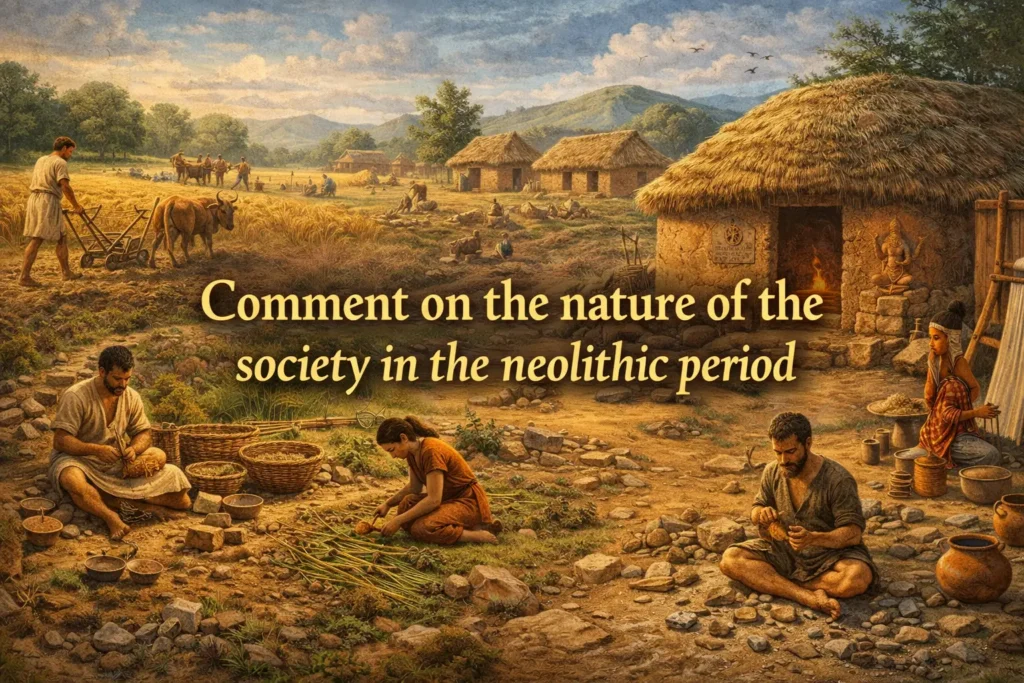
One of the most defining features of Neolithic society was the emergence of settled life. Unlike the Paleolithic people who were largely nomadic, Neolithic communities began to establish permanent or semi-permanent settlements near fertile land and water sources. This sedentary lifestyle was made possible by the domestication of plants and animals. The cultivation of crops such as wheat, barley, and rice, along with the domestication of animals like cattle, sheep, and goats, provided a stable food supply. As a result, people no longer needed to move constantly in search of food, leading to the growth of villages and small communities.
The development of agriculture brought about significant changes in social organization. Neolithic society gradually moved from relatively egalitarian groups to more structured communities. The concept of property began to emerge, as families or groups laid claim to land and resources. This led to the development of kinship-based social structures, where families formed the basic units of society. Over time, differences in wealth and access to resources may have contributed to the beginnings of social inequality.
Another important aspect of Neolithic society was the division of labor. With the advent of agriculture, not everyone needed to be involved in food production. This allowed individuals to specialize in different occupations such as tool-making, pottery, weaving, and construction. The production of polished stone tools, as well as the invention of pottery for storage and cooking, reflects technological advancements and growing craftsmanship. This specialization contributed to the complexity of social life and laid the foundation for later economic systems.
The nature of Neolithic society was also deeply connected to technological innovations. The use of polished stone tools improved efficiency in farming and other activities. The invention of the wheel, although appearing later in the Neolithic period in some regions, further enhanced transportation and trade. Housing also evolved, with people constructing huts made of mud, thatch, or wood. In some areas, more complex structures and even early forms of town planning can be observed.
Religion and belief systems played a significant role in shaping Neolithic society. Archaeological evidence suggests that people developed spiritual practices related to nature, fertility, and agricultural cycles. The worship of mother goddesses, fertility symbols, and natural forces such as the sun and rain indicates a close connection between religion and daily life. Burial practices became more elaborate, reflecting beliefs in an afterlife and respect for ancestors. These practices highlight the growing complexity of cultural and ideological life.
Social relations during the Neolithic period were likely based on cooperation and community participation. Agricultural activities required collective effort, especially during sowing and harvesting seasons. This fostered a sense of interdependence among community members. However, as societies grew larger and more complex, there may have been the emergence of leadership roles or authority figures to manage resources and resolve conflicts.
Trade and exchange also began to develop during the Neolithic period. Surplus production enabled communities to exchange goods such as tools, pottery, and raw materials. This not only facilitated economic interaction but also promoted cultural exchange between different regions. The presence of non-local materials in archaeological sites indicates the existence of early trade networks.
In conclusion, the nature of Neolithic society was marked by a transition to settled agricultural life, the growth of village communities, and the emergence of new social, economic, and cultural patterns. While it retained elements of earlier communal living, it also laid the foundations for more complex social structures, technological advancements, and organized systems of belief. The Neolithic period thus represents a transformative stage in human history, setting the stage for the rise of civilizations.
Comment on the nature of the society in the neolithic period Comment on the nature of the society in the neolithic period Comment on the nature of the society in the neolithic period Comment on the nature of the society in the neolithic period Comment on the nature of the society in the neolithic period Comment on the nature of the society in the neolithic period Comment on the nature of the society in the neolithic period Comment on the nature of the society in the neolithic period Comment on the nature of the society in the neolithic period