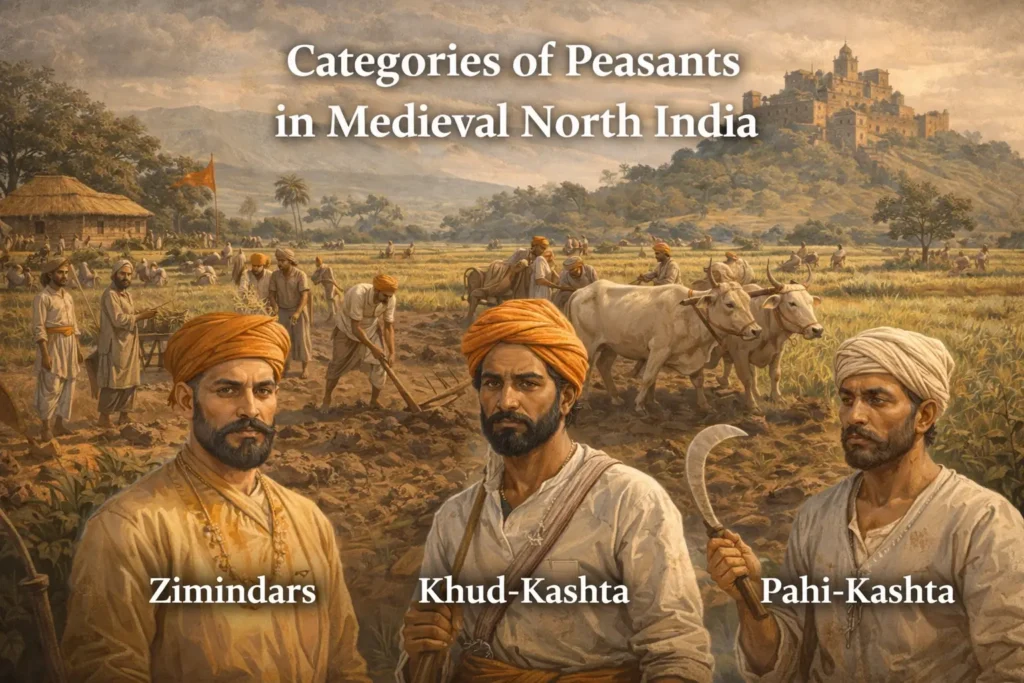
Categories of Peasants in Medieval North India
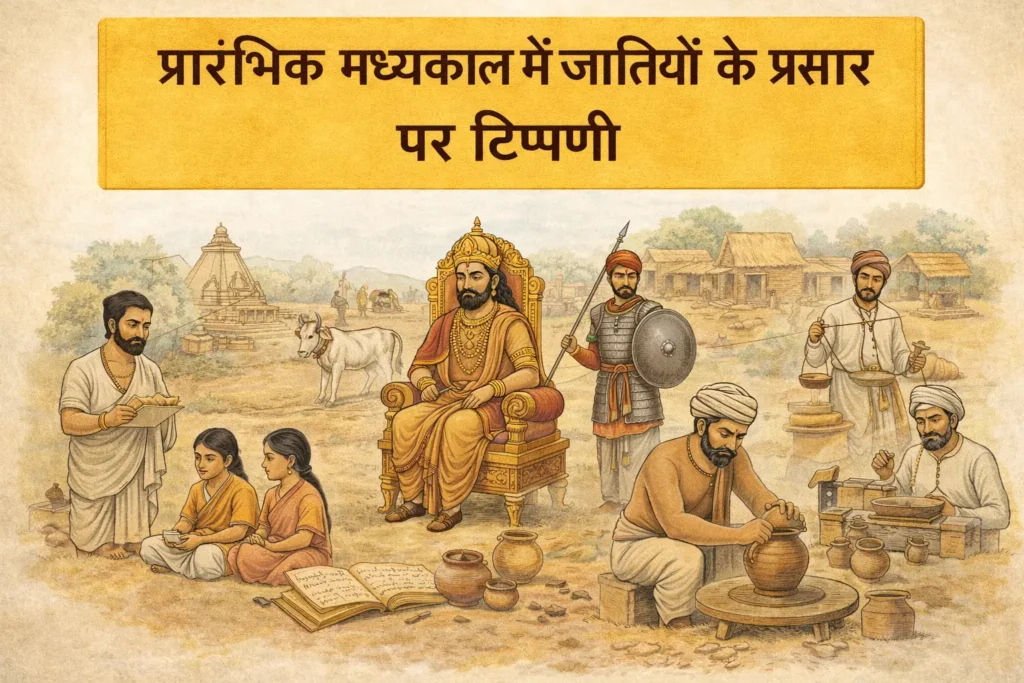
Peasantry formed the backbone of the agrarian economy of Medieval North India (c. 1200–1700 CE). The rural society during this period was not homogeneous; rather, it consisted of multiple categories of peasants differentiated by land rights, control over resources, revenue obligations, and social status. These distinctions evolved under the Delhi Sultanate and the Mughal Empire, shaped by state policies, local customs, and ecological conditions.
1. Khudkasht Peasants
Khudkasht peasants were resident cultivators who tilled land in their own village. They possessed hereditary rights over cultivation and enjoyed relative security of tenure as long as they paid land revenue. These peasants were considered reliable taxpayers and were generally protected by the state. Under the Mughals, especially during Akbar’s reign, khudkasht cultivators benefited from revenue settlements and were less likely to be displaced. They often formed the stable core of village society.
2. Pahikasht Peasants
In contrast, pahikasht peasants were non-resident or migrant cultivators who cultivated land outside their home villages. They were attracted to areas with low revenue demand, fertile soil, or political stability. Pahikasht cultivators had fewer rights and were more vulnerable to exploitation and displacement. The Mughal state often offered concessions, such as reduced revenue rates, to encourage pahikasht peasants to settle and bring uncultivated land under plough.
3. Owner-Cultivators
A significant category consisted of owner-cultivators, who possessed ownership or strong customary rights over land. These peasants directly cultivated their holdings using family labor. They enjoyed higher social status within the village hierarchy and were less dependent on intermediaries. In many regions, such cultivators belonged to dominant agrarian castes like Jats, Kurmis, and Rajputs.
4. Tenant Peasants
Tenant peasants cultivated land owned by zamindars, state grantees, or religious institutions. They paid rent in cash, kind, or labor services. Tenancy was often insecure, with frequent changes in rent and conditions. Sharecropping arrangements were common, where peasants handed over a portion of the produce to the landlord. Tenant peasants bore a heavy burden and were more susceptible to economic distress.
5. Zamindari Peasants and Intermediaries
Some peasants functioned as zamindars or village-level intermediaries. They held hereditary rights over land and exercised control over village resources and labor. Zamindars collected revenue on behalf of the state and retained a portion as their share. Although zamindars cultivated land themselves, their primary role was as revenue collectors and local power holders. This category blurred the line between peasantry and rural elite.
6. Sharecroppers and Agricultural Laborers
At the lower end of the agrarian hierarchy were sharecroppers and landless laborers. Sharecroppers cultivated land in return for a share of the produce, often half. Agricultural laborers worked for wages in cash or kind and owned little or no land. These groups were economically vulnerable and frequently subjected to forced labor (begar) and extractions by landlords and the state.
7. Tribal and Marginal Cultivators
Tribal groups and marginal cultivators occupied forested and frontier zones. Their agriculture was often shifting or semi-settled. Over time, the expansion of agrarian society brought them into contact with the state, leading to gradual incorporation into the peasant economy through taxation, land grants, and settlement policies.
In conclusion, the peasantry of Medieval North India was diverse and stratified, ranging from secure owner-cultivators to landless laborers. These categories were shaped by land rights, revenue systems, and state intervention under the Delhi Sultanate and Mughal rule. Understanding these distinctions highlights the complex social and economic relationships that sustained the medieval agrarian economy and underpinned state power.
Buy anything @Rs.1 Only on Amazon
Peasants in Medieval North India Peasants in Medieval North India Peasants in Medieval North India Peasants in Medieval North India Peasants in Medieval North India Peasants in Medieval North India Peasants in Medieval North India Peasants in Medieval North India Peasants in Medieval North India