Discuss the recent historiographical approaches to understand the economic history of ancient period in India
Understanding the economic history of ancient India has undergone significant shifts in historiography over the past several decades. Traditional narratives that once focused narrowly on political events and elite actors have gradually given way to more nuanced, interdisciplinary, and evidence-based approaches that seek to reconstruct economic structures, processes, and lived experiences across time and space.
1. From Traditional Narratives to Socio-Economic Inquiry
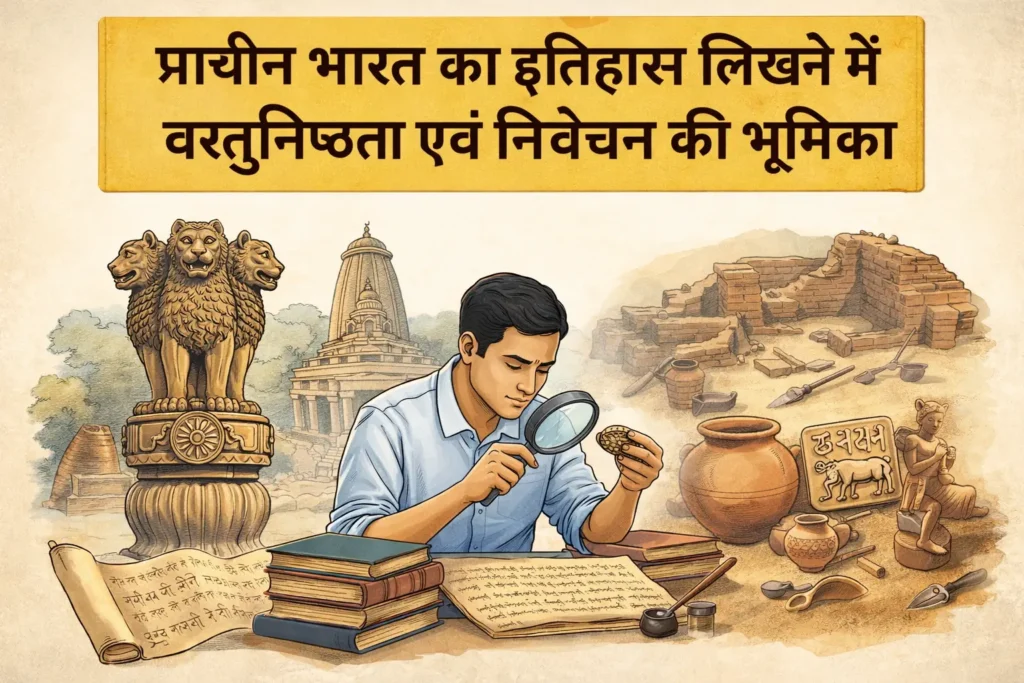
Early Indian historiography, especially under colonial scholarship, tended to prioritize political events, dynastic chronologies, and textual exegesis of classical sources. This approach often portrayed ancient India’s economy through broad generalizations — for example, depicting it as a static agrarian society or emphasizing only the wealth of ancient kingdoms without systematically analyzing production, trade, and distribution mechanisms. Such perspectives were criticized for being overly reliant on literary sources like the Arthashastra or Puranic accounts, which reflected normative or ideological worldviews rather than empirical economic structures.
In contrast, modern historiography emphasizes socio-economic formations rather than mere political histories. A landmark shift came with scholars like D. D. Kosambi, who urged historians to adopt scientific methods and to interpret historical change in terms of socio-economic dynamics instead of isolated political episodes. Kosambi’s work encouraged historians to situate economic activities — agriculture, trade, labor, and production — within broader social formations, laying the groundwork for economic history as an analytical field rather than descriptive storytelling.
2. Marxist and Structural Analyses
From the mid-20th century, Marxist historiography significantly influenced the study of economic history by introducing concepts such as mode of production, class relations, surplus extraction, and structures of exploitation. Historians like R. S. Sharma applied these frameworks to argue that post-Gupta India experienced processes analogous to feudalization, characterized by the fragmentation of political authority, the rise of agrarian landed elites, and the contraction of long-distance trade. These models stressed the centrality of agrarian production, land revenue systems, and labor relations in shaping economic structures. However, such interpretations have also faced criticism for over-generalizing feudal models derived from European history to the Indian context without sufficiently accounting for India’s unique institutional and regional variations.
3. Interdisciplinary and Archaeological Approaches
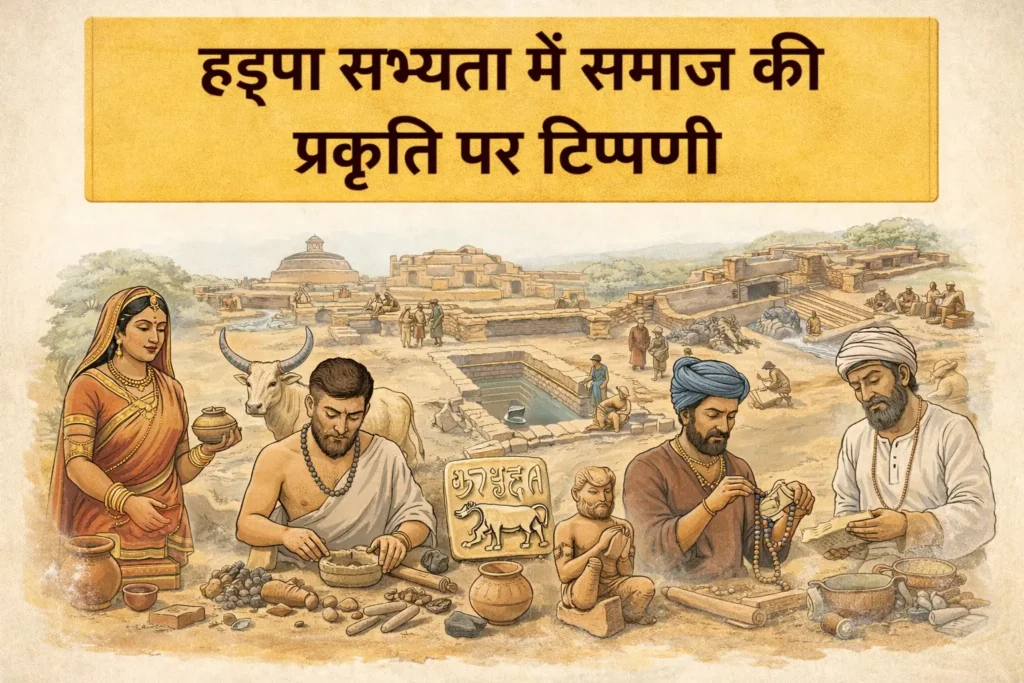
One of the most significant recent historiographical trends is the growing interdisciplinary approach that integrates archaeology, epigraphy, numismatics, anthropology, and environmental studies with traditional textual analysis. Material evidence — such as coins, seals, pottery, warehouse remains, and urban layouts from archaeological sites — now plays a central role in economic reconstructions. Excavations at Indus Valley sites (e.g., Harappa and Mohenjo-Daro) reveal evidence of standardized weights and measures, craft specialization, and long-distance exchange networks, painting a picture of complex economic activity in the third millennium BCE.
The study of inscriptions and coinage has also enriched understandings of ancient markets, taxation systems, and monetary economies. Coin finds across different regions help trace the extent of circulation, state control, and regional commercial hubs, moving beyond generic statements about trade to map concrete economic interactions.
4. Pluralistic and Regional Perspectives
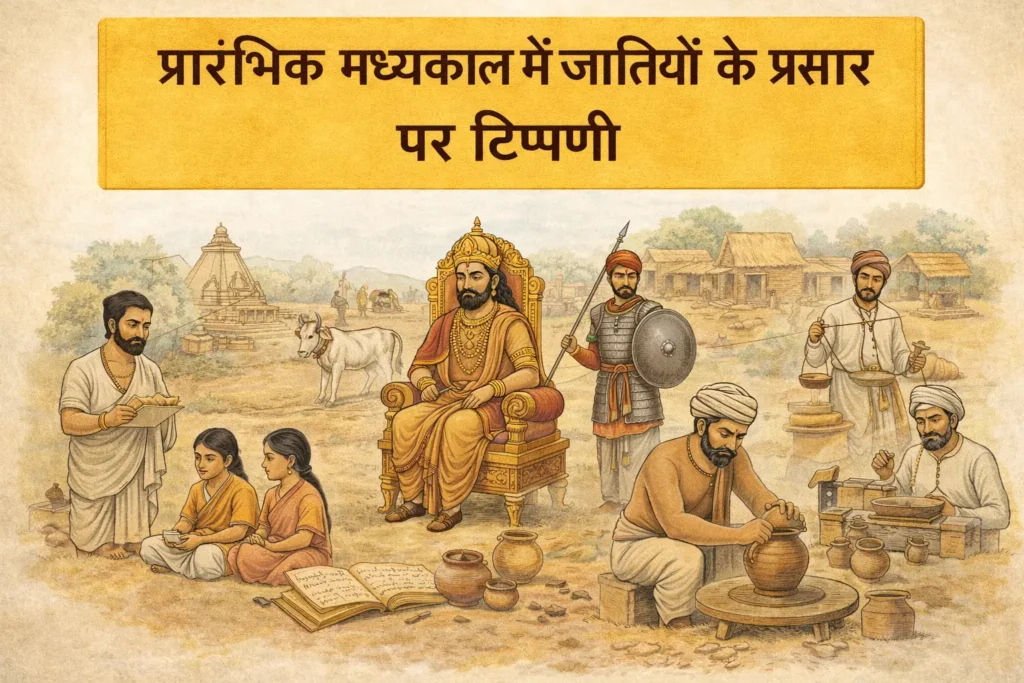
Another recent trend in historiography is the move away from pan-Indian generalizations toward regional and localized studies. Scholars now emphasize that ancient economic systems varied significantly across regions due to ecological conditions, resource endowments, and cultural traditions. For example, economic patterns in the Deccan, Tamilakam, and the Indo-Gangetic plains exhibit distinct trajectories in agriculture, craft production, and trade networks. This pluralistic approach resists monolithic narratives and argues for contextual economic histories that respect local diversity.
5. New Frontiers: Gender, Environment, and Global Contexts
Recent historiography also pushes the boundaries by incorporating gendered analyses and environmental history. Rather than treating women and marginalized groups as marginal figures, scholars investigate their roles in labor, production, and market activities, recognizing that economic life in ancient India cannot be fully understood without accounting for gendered divisions of labor. Environmental history has opened up new lines of inquiry into how monsoons, river systems, soil fertility, and ecological constraints shaped agricultural productivity, settlement patterns, and trade infrastructure. This perspective underscores that ancient economies were deeply embedded in ecological contexts, not abstract systems detached from natural conditions. Finally, placing ancient Indian economic systems in global and comparative frameworks highlights India’s integration into broader exchange networks — such as Indo-Roman trade — and encourages comparative analysis with contemporary economies in China, West Asia, and beyond. This global lens challenges insular narratives and situates India within broader ancient world economic systems.
Click Here Buy @Rs.1/- only from Amazon
understand the economic history of ancient period in India understand the economic history of ancient period in India understand the economic history of ancient period in India understand the economic history of ancient period in India understand the economic history of ancient period in India understand the economic history of ancient period in India understand the economic history of ancient period in India understand the economic history of ancient period in India