
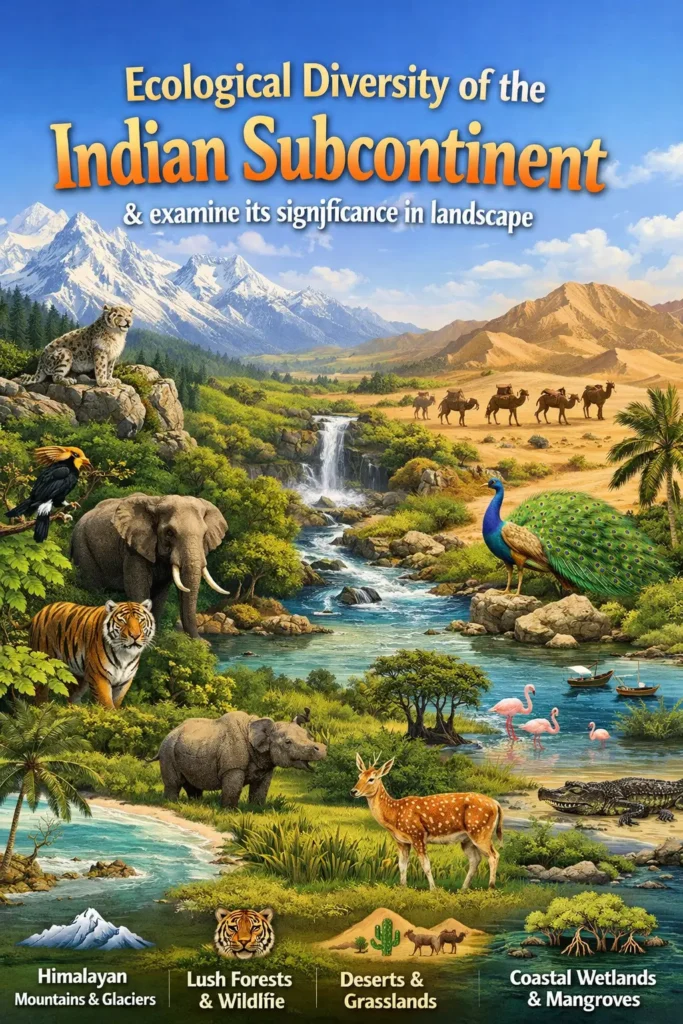
Ecological diversity of the Indian subcontinent & examine its significance
The ecological diversity of the Indian subcontinent is one of the most remarkable features of its natural environment. Stretching from the towering Himalayas in the north to the coastal plains and islands in the south, and from the arid deserts of the west to the lush forests of the northeast, the region exhibits an extraordinary variety of ecosystems, climates, flora, and fauna. This diversity is the result of complex geographical formations, varied climatic conditions, and long evolutionary processes, making the subcontinent one of the richest biodiversity zones in the world.
At the broadest level, the Indian subcontinent can be divided into several major ecological regions. The Himalayan region, characterized by high altitudes, snow-covered peaks, and cold climates, supports unique vegetation such as alpine forests and meadows, along with rare species like the snow leopard. In contrast, the Indo-Gangetic plains are fertile alluvial lands with dense human settlement, supporting agriculture and diverse plant life. The Thar Desert in the west represents an arid ecosystem with sparse vegetation and specially adapted wildlife. The Deccan Plateau, with its rocky terrain and tropical climate, supports dry deciduous forests and grasslands.
Further, the coastal regions along the Arabian Sea and the Bay of Bengal provide rich marine and estuarine ecosystems. Mangrove forests, such as those in the Sundarbans, act as vital ecological buffers and are home to unique species like the Bengal tiger. The northeastern region, receiving heavy rainfall, is covered with dense tropical rainforests and is recognized as a global biodiversity hotspot. Additionally, the island ecosystems of the Andaman and Nicobar Islands and Lakshadweep possess distinct flora and fauna due to their isolation.
Climatic diversity plays a crucial role in shaping this ecological variation. The monsoon system, which brings seasonal rainfall, creates distinct wet and dry periods, influencing vegetation patterns and agricultural cycles. Temperature variations from the cold Himalayas to the tropical south further contribute to ecological differentiation. Soil types, ranging from alluvial to laterite and desert soils, also determine the kind of vegetation and land use practices in different regions.
The significance of this ecological diversity is profound and multifaceted. Firstly, it supports an immense variety of plant and animal species, many of which are endemic, meaning they are found nowhere else in the world. This biodiversity is essential for maintaining ecological balance, as different species play specific roles in food chains, nutrient cycles, and ecosystem stability.
Secondly, ecological diversity provides the basis for varied livelihoods. Agriculture, forestry, fishing, and pastoralism are all shaped by regional ecological conditions. For instance, rice cultivation thrives in water-rich areas, while millets are grown in arid regions. Forests provide timber, medicinal plants, and non-timber forest products, supporting millions of people, especially indigenous communities.
Thirdly, diverse ecosystems contribute to environmental sustainability. Forests act as carbon sinks, wetlands regulate water flow and prevent floods, and mangroves protect coastlines from erosion and cyclones. The Himalayas serve as a crucial water source, feeding major rivers like the Ganga, Brahmaputra, and Indus, which sustain vast populations.
Culturally, ecological diversity has deeply influenced the lifestyle, traditions, and beliefs of people across the subcontinent. Different regions have developed distinct cultural practices, cuisines, and settlement patterns in harmony with their natural surroundings. Many religious traditions also emphasize the sacredness of nature, contributing to conservation practices.
However, this rich ecological heritage faces serious challenges today. Rapid urbanization, deforestation, climate change, pollution, and overexploitation of resources are threatening ecosystems and biodiversity. The loss of ecological balance can lead to severe consequences such as soil degradation, water scarcity, and loss of species.
In conclusion, the ecological diversity of the Indian subcontinent is a vital asset that sustains life, supports livelihoods, and shapes cultural identity. Its significance extends beyond environmental value to economic and social dimensions. Therefore, there is an urgent need for sustainable management and conservation efforts to protect this diversity for future generations.
Ecological diversity of the Indian subcontinent & examine its significance Ecological diversity of the Indian subcontinent & examine its significance Ecological diversity of the Indian subcontinent & examine its significance Ecological diversity of the Indian subcontinent & examine its significance Ecological diversity of the Indian subcontinent & examine its significance Ecological diversity of the Indian subcontinent & examine its significance Ecological diversity of the Indian subcontinent & examine its significance Ecological diversity of the Indian subcontinent & examine its significance