
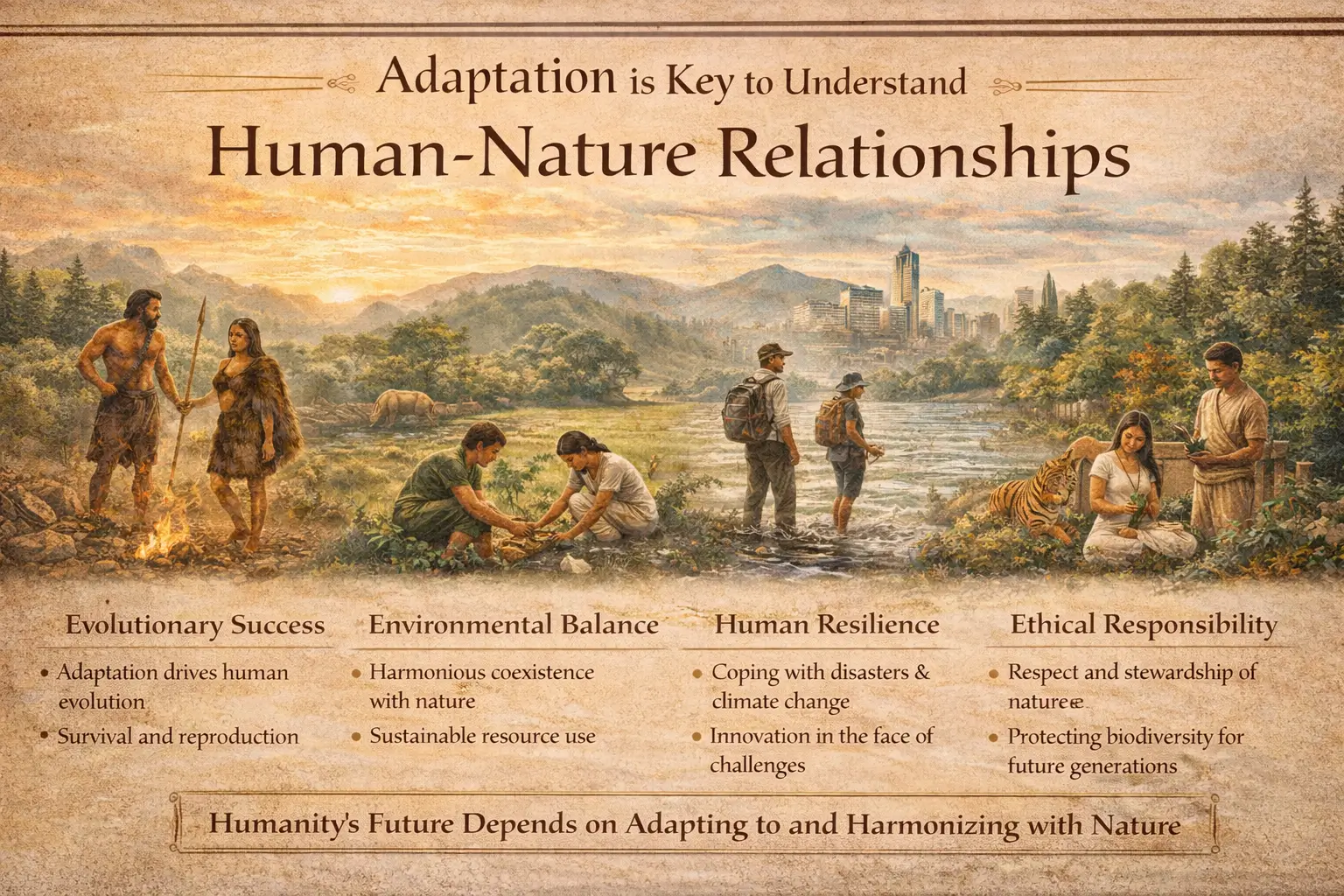
Adaptation is key to understand human nature relationships
Adaptation is key to understand human nature relationships
Adaptation is a fundamental concept for understanding the relationship between humans and nature. It refers to the ability of human beings to adjust their behavior, practices, and lifestyles in response to environmental conditions. Throughout history, adaptation has shaped how humans interact with nature, ensuring survival, development, and continuity. The dynamic interplay between human needs and natural forces reveals that adaptation is not just a biological process but also a cultural, social, and technological phenomenon.
From the earliest stages of human existence, adaptation determined survival. Early humans lived as hunter-gatherers, closely dependent on their natural surroundings. They adapted to different climates, landscapes, and ecological conditions by developing tools, clothing, and shelter suited to their environment. For example, people living in cold regions created warm clothing and insulated homes, while those in tropical regions adapted through lighter clothing and different food practices. This demonstrates how human life has always been shaped by environmental conditions.
Adaptation also plays a key role in the development of human societies. As humans transitioned from nomadic lifestyles to settled agriculture, they learned to manipulate nature to meet their needs. The domestication of plants and animals, irrigation techniques, and seasonal farming practices were all forms of adaptation. These changes allowed humans to produce surplus food, leading to population growth and the rise of civilizations. However, even as humans began to control aspects of nature, they remained dependent on natural cycles such as rainfall, soil fertility, and climate patterns.
Cultural adaptation is another important dimension of the human–nature relationship. Different societies have developed unique traditions, beliefs, and practices based on their interaction with the environment. Indigenous communities, for instance, often possess deep ecological knowledge and sustainable practices that reflect a harmonious relationship with nature. Their ways of life emphasize respect for natural resources and balance within ecosystems. Such cultural adaptations highlight the importance of learning from nature rather than exploiting it.
In the modern era, adaptation has taken new forms with the advancement of science and technology. Humans have developed innovative ways to cope with environmental challenges, such as constructing dams, developing drought-resistant crops, and using renewable energy sources. These technological adaptations demonstrate human ingenuity and the ability to respond to changing conditions. However, they also raise important questions about sustainability and the long-term impact of human actions on the environment.
The concept of adaptation is particularly relevant in the context of climate change. As global temperatures rise and weather patterns become more unpredictable, societies must adapt to new environmental realities. This includes developing strategies to manage natural disasters, conserve resources, and reduce environmental degradation. Adaptation in this context is not just about survival but also about ensuring the well-being of future generations. It requires a collective effort at local, national, and global levels.
At the same time, the relationship between humans and nature is not always balanced. Excessive exploitation of natural resources, deforestation, pollution, and industrialization have disrupted ecological systems. In many cases, humans have attempted to dominate nature rather than adapt to it. This has led to environmental crises that threaten both natural ecosystems and human societies. Therefore, adaptation must also involve a shift in perspective—from control and exploitation to coexistence and sustainability.
Furthermore, adaptation is closely linked to resilience, which is the ability to recover from environmental challenges. Communities that are better adapted to their surroundings are more resilient in the face of natural disasters and changes. This highlights the importance of knowledge, planning, and sustainable practices in maintaining a stable relationship with nature.
In conclusion, adaptation is key to understanding the complex relationship between humans and nature. It has guided human survival, shaped societies, and influenced cultural and technological development. However, in the face of modern environmental challenges, adaptation must be accompanied by responsibility and sustainability. By learning to adapt in harmony with nature rather than against it, humans can ensure a balanced and enduring relationship with the natural world.
Adaptation is key to understand human nature relationships Adaptation is key to understand human nature relationships Adaptation is key to understand human nature relationships Adaptation is key to understand human nature relationships Adaptation is key to understand human nature relationships Adaptation is key to understand human nature relationships Adaptation is key to understand human nature relationships Adaptation is key to understand human nature relationships Adaptation is key to understand human nature relationships