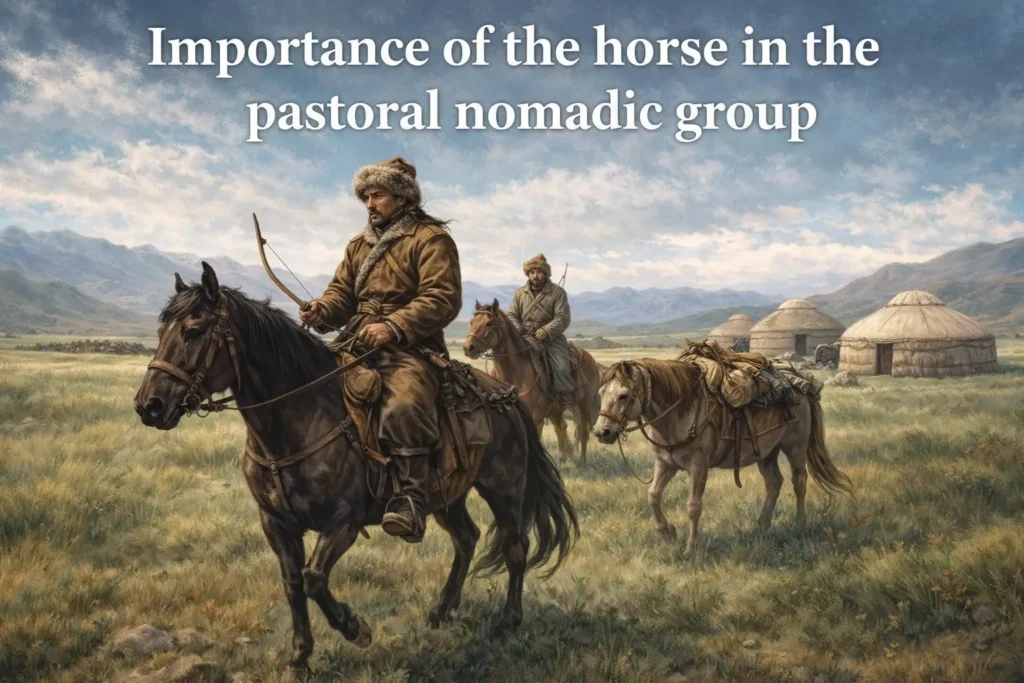
Importance of the horse in the pastoral nomadic group
Indo-Persian history-writing during the Mughal period represents a rich and sophisticated tradition that combined Persian literary culture with Indian historical realities. This historiographical practice flourished under the patronage of the Mughal emperors and reflected not only political events but also administrative systems, culture, religion, and intellectual life. Several important features characterize this tradition.
One of the most significant features was royal patronage. Mughal emperors actively encouraged historians, scholars, and court writers to document their reigns. For instance, under Akbar, history-writing reached a high level of refinement. His court historian Abu’l Fazl produced the famous works Akbarnama and Ain-i-Akbari, which combined political narrative with detailed administrative, economic, and cultural descriptions. This shows how historiography was closely tied to imperial authority and often aimed at legitimizing the ruler’s power.
Another key feature was the Persian language as the medium of expression. Persian had become the official language of administration and culture in the Mughal Empire. As a result, most historical works were written in Persian, even though they described Indian society. This created a synthesis where Indian themes were expressed through Persian literary styles and conventions. Works like Baburnama by Babur and Tuzuk-i-Jahangiri by Jahangir illustrate this blend of personal narrative and classical Persian prose.
The chronological and narrative style of writing was another defining aspect. Indo-Persian historians typically followed an annalistic method, recording events year by year. Their narratives often focused on political developments such as wars, conquests, successions, and administrative reforms. However, unlike purely dry chronicles, many works were highly literary, filled with elaborate metaphors, poetic expressions, and rhetorical flourishes, reflecting the influence of Persian literary traditions.
A related feature was the emphasis on court-centric history. Most historians were associated with the royal court, so their writings naturally focused on the emperor, nobility, and elite classes. The lives of common people, peasants, and marginalized groups were rarely discussed in detail. This gives Indo-Persian historiography a somewhat elite perspective, though it still provides valuable insights into governance and society.
Another important characteristic was the fusion of history with moral and didactic elements. Historians often aimed not just to record events but to provide lessons in governance and ethics. Kings were portrayed as ideal rulers who upheld justice, order, and divine will. For example, Akbar was depicted as a just and enlightened monarch, embodying virtues that future rulers should emulate. This moral dimension made history a tool of instruction as well as record-keeping.
The tradition also displayed a strong interest in administration and governance. Works like Ain-i-Akbari provide detailed information on revenue systems, military organization, social structure, and economic conditions. This reflects the Mughal state’s concern with efficient governance and record maintenance. Such texts are invaluable for modern historians studying the institutional framework of the empire.
Biographical writing (tazkiras) was another notable feature. These works contained accounts of scholars, poets, saints, and nobles, highlighting the intellectual and cultural life of the time. They provide insights into networks of patronage and the spread of ideas across the empire.
Religious and cultural inclusivity also marked Indo-Persian historiography, especially during the reign of Akbar. His policy of Sulh-i-Kul (universal tolerance) influenced historians to adopt a relatively broad outlook, incorporating information about different communities and traditions. However, this inclusivity varied under different rulers, such as Aurangzeb, when religious orthodoxy became more pronounced.
Finally, Indo-Persian history-writing often reflected bias and subjectivity. Since historians depended on royal patronage, they tended to glorify the ruler and justify imperial policies. Critical perspectives were limited, and failures or controversies were sometimes downplayed or omitted.
In conclusion, Indo-Persian historiography during the Mughal period was a complex and multifaceted tradition. It combined Persian literary elegance with Indian historical content, emphasized royal authority, and provided detailed administrative insights. Despite its biases, it remains an indispensable source for understanding the political, cultural, and intellectual life of the Mughal Empire.
Click Here Buy @Rs.1/- only from Amazon
Importance of the horse in the pastoral nomadic group Importance of the horse in the pastoral nomadic group Importance of the horse in the pastoral nomadic group Importance of the horse in the pastoral nomadic group Importance of the horse in the pastoral nomadic group Importance of the horse in the pastoral nomadic group Importance of the horse in the pastoral nomadic group