
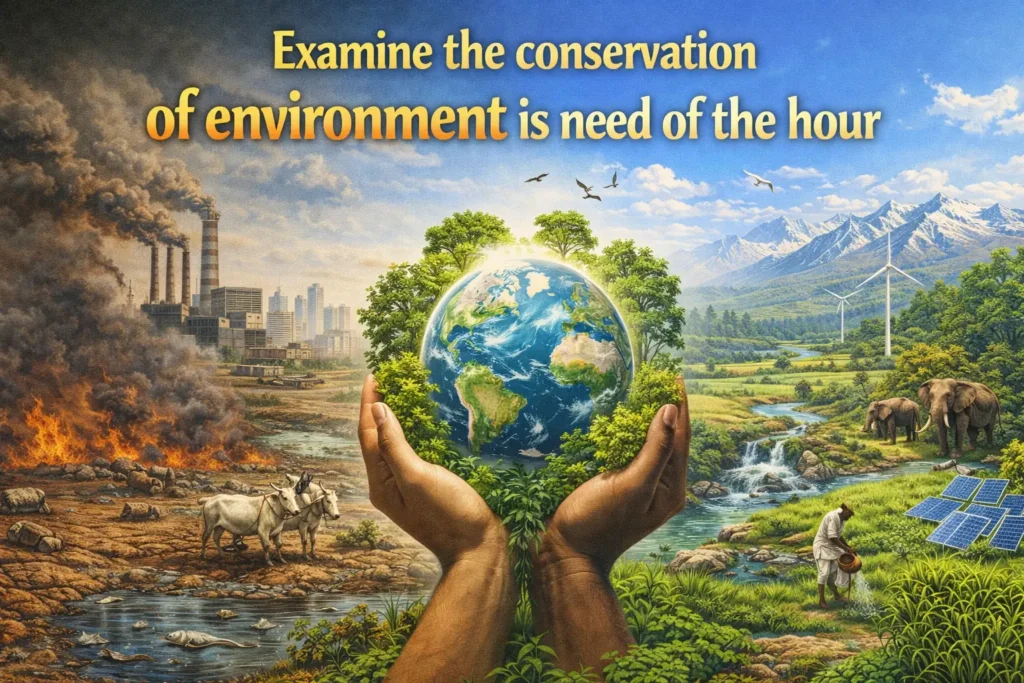
Examine the conservation of environment is need of the hour
The conservation of the environment has become one of the most urgent concerns of the present time. Rapid industrialization, urbanization, population growth, and the overexploitation of natural resources have severely disturbed the ecological balance. As a result, the idea that environmental conservation is the “need of the hour” is not merely a slogan but a pressing reality that demands immediate attention and action.
One of the key reasons for the urgency of environmental conservation is the increasing degradation of natural resources. Forests are being cleared for agriculture, industries, and urban expansion, leading to deforestation and loss of biodiversity. Wildlife habitats are shrinking, pushing many species toward extinction. Similarly, water resources are being depleted and polluted due to excessive use, industrial waste, and poor management. Air pollution, especially in urban areas, has reached alarming levels, affecting human health and quality of life.
Another major concern is climate change, which has emerged as a global crisis. Rising temperatures, melting glaciers, irregular rainfall, and extreme weather events such as floods, droughts, and cyclones are clear indicators of environmental imbalance. These changes not only threaten ecosystems but also have serious implications for agriculture, food security, and human livelihoods. Developing countries like India are particularly vulnerable due to their dependence on natural resources and large populations.
Environmental conservation is essential for maintaining ecological balance. Every component of the ecosystem—plants, animals, soil, water, and air—is interconnected. The destruction of one element can have cascading effects on the entire system. For example, deforestation can lead to soil erosion, loss of fertility, and disruption of water cycles. Conserving the environment ensures the stability and sustainability of these natural processes, which are vital for life on Earth.
The importance of conservation is also linked to economic and social well-being. Natural resources form the basis of many economic activities such as agriculture, forestry, fishing, and tourism. Degradation of these resources can lead to loss of livelihoods, especially for rural and indigenous communities who are directly dependent on nature. Sustainable use of resources, therefore, is crucial for long-term economic development and poverty alleviation.
In addition, environmental conservation is closely related to public health. Pollution of air, water, and soil can cause various diseases, including respiratory problems, water-borne illnesses, and even cancer. A clean and healthy environment is essential for ensuring the well-being of present and future generations. Thus, conservation is not only an environmental issue but also a human survival issue.
Efforts toward environmental conservation must involve both government initiatives and public participation. Governments play a key role in framing laws and policies for environmental protection, such as regulations on pollution control, wildlife conservation, and sustainable development. However, these measures can only be effective if supported by active involvement of citizens. Awareness, education, and community participation are essential in promoting environmentally responsible behavior.
Adopting sustainable practices is one of the most effective ways to conserve the environment. This includes reducing waste, recycling, conserving water, using renewable energy sources, and protecting natural habitats. Traditional knowledge and practices, which often emphasize harmony with nature, can also provide valuable insights for sustainable living.
Furthermore, global cooperation is necessary to address environmental challenges. Issues like climate change and biodiversity loss do not respect national boundaries and require collective action at the international level. Agreements and collaborations among countries are essential for achieving meaningful progress.
In conclusion, the conservation of the environment is indeed the need of the hour due to the growing threats posed by human activities and environmental degradation. It is essential for maintaining ecological balance, ensuring sustainable development, protecting human health, and preserving the planet for future generations. Immediate and collective action is required to address these challenges and build a more sustainable and harmonious relationship between humans and nature.
Examine the conservation of environment is need of the hour Examine the conservation of environment is need of the hour Examine the conservation of environment is need of the hour Examine the conservation of environment is need of the hour Examine the conservation of environment is need of the hour Examine the conservation of environment is need of the hour Examine the conservation of environment is need of the hour Examine the conservation of environment is need of the hour Examine the conservation of environment is need of the hour